

PCVR
Controls
Saving
Clone Hero Custom Support
rlrr Custom Support
Misc.
Multiplayer
Custom Art
-
Custom Art Packs
In-Game Advanced RAW .MID Highway
MIDI Connectivity
Meta Quest
Controls
Saving
Clone Hero Custom Support
rlrr Custom Support
Misc.
Multiplayer
Custom Art
-
Custom Art Packs
In-Game Advanced RAW .MID Highway
MIDI Connectivity
If you have an issue and cannot find the solution here. Join the Discord.
AI Assistant: Don't want to search in the help guide? Trouble findind something? Just type in and ask the VR Drums Ult. Chatbot to help with your questions, loaded with VR Drums docs and info.
Paradiddle.rlrr Custom Song Support
The advanced raw 2D highway has been converted to play .rlrr charts. Easy - Expert. Supports charts from paradb.net
Quest Info:
Add the custom song folders too your Quest at location /Documents/CustomSongs
You can have them as standard unzipped song folders or just included the .zip file, we'll handle the rest. When you are done adding your songs on your Quest, start the game press the "Scan Songs" button on the main menu, allow the permission. Get back to the game by pressing your right controllers Meta button. Your song browser will have the newly added songs. Select one and any song stem to begin.
PCVR Info:
Select your .rlrr song folders from anywhere on your computer. Select a song folder and then any song stem to begin.
Difficulty
Select easy - expert to play the different difficulty charts.
Highway Speed / Spacing
Are the notes to close together? You can increase this setting to spread the notes farther apart from each other. This is useful for really fast BPM songs.
Browse your available .rlrr drum charts using the "2D Note Highway .RLRR Songs" button located on the main menu.

Clone Hero Controller MIDI Kit Setup (PCVR)

This is not the tutorial for playing Clone Hero song folders in-game, but for using the VR drum kit as a MIDI controller, you've probably seen streamers do this live, using their electronic drums sets to control the Clone Hero application itself. You can use the VR drum kit and SteamVR desktop overlays in-game to play the desktop PC version of Clone Hero while using the VR drum kit as as a MIDI drum controller. What you will need for this is listed below and free.
What You'll Need
1.) Active MIDI port on your PC. Don't have one? Make a virtual MIDI input port ---> (loopMIDI)
3.) Clone Hero installed on active PC.
1.) Install loopMIDI (Create A Virtual MIDI Port)
Install the loopMIDI program. We will select and use this virtual MIDI port in Clone Hero later. When the loopMIDI application is first started there are no virtual MIDI ports. Click the "+" button at the lower left of the application to create a virtual MIDI port. The virtual port is now ready and named "loopMIDI Port".

2. Start VR Drums
Start SteamVR and then start VR Drums and look on your desktop monitor for the MIDI Router window. These are all your connected MIDI devices. Click on the one you want to route MIDI drum notes, in this case we select the loopMIDI port we just setup.

3. Start Clone Hero
Install Clone Hero if you haven't yet. Start Clone Hero. When the game starts up it can be a little difficult to control without having a guitar controller connected but you can use your PC's keyboard. Press ENTER, the Player1 options will appear. Use the arrow keys on your keyboard to navigate the menu and the A key to select.
Select Controller.
Select Drums.
Select Input.
Once you select input scroll up or down with the arrow keys on your keyboard and find the "loopMIDI Port" the virtual MIDI port we made earlier with loopMIDI. Esc key to go back.
Now we have the MIDI port "loopMIDI Port" assigned for VR Drums to output notes to and Clone Hero to receive them.
See Clone Hero App in VR
Go back to VR Drums now that we have loopMIDI port setup and controls working, we will need a way to see our PC's desktop screen inside of VR so that we can see the Clone Hero game screen while in VR Drums. To do this while you are in VR Drums Ult. on your left controller, press the Menu / Home button. SteamVR's UI menu will appear. In the lower left click the Desktop button, it looks like a icon of a screen, see example video. You will see your PC desktop screen now in-game. Move it anywhere by grabbing it near the bottom of the screen. Now let's pin the screen, so when we exit SteamVR UI, we will still see the screen and be able to play VR Drums as well. Press the "pin / mount" or sometimes called "Float in World" button at the bottom of the screen.
Now that our screen is pinned it will remain in game, exit the Steam menu by pressing your left controllers menu / home button again.
Setup Drums In Clone Hero
Lets go back to Clone Hero. Enter the player menu we were in before, press the enter key and use the keyboards arrow keys to find the controller setup.
Clone Hero will then ask you to hit what drum you want to use for each color. We will have our VR headset on for this step and navigate and see the Clone Hero menu with our pinned desktop screen in-game. Below is a color legend of the standard colors used in Clone Hero and a standard setup, but you can hit whatever drum you want to use if you wish.
Yellow Hat
Green Crash / Splash
Red Snare
Blue Tom/Ride
Enable "Guides" in the drum builder tab. It will highlight each drum and cymbal for you with the correct Clone Hero note color.


Calibration Tool
Click anywhere in the Clone Hero menu/background to go back to the main menu. In the main menu select Settings. Select CALIBRATION TOOL.
When the calibration tool starts, you will hit the VR drums in VR Drums Ult. to the beat Clone Hero starts playing.
The VR drums are now set to the color notes that you hit and will be used in Clone Hero, so the VR drums will now also work as navigating the menus (blue, yellow, red, green keys) to the drums you set, so be careful not to hit them again after the calibration process or it will make you do it again. When you are done press the A key on your keyboard to enter the next calibration step.
The second calibration step will have you hit the VR drum kit in VR Drums Ult. to an scrolling visual note highway. Align the incoming lines with the beat/lines. Play naturally how you would in-game for best results.
When you are done press the A key on your keyboard. Calibration is done and offset is now set for you. Auto calibration is a close sync. Enter the Clone Hero main menu > Settings > Adjust the video delay % to align your hits if the auto calibration is off by a bit. You are ready to play.
Recording Process Tips
You can capture both the VR Drums Ult. screen and Clone Hero in OBS. Capture two separate windows side by side or see other options below.
If you want to capture your VR view that includes the SteamVR pinned Clone Hero desktop screen, you can use Oculus Mirror. https://developers.meta.com/horizon/documentation/native/pc/dg-compositor-mirror/
Oculus mirror will capture everything you see in your VR headset, including your pinned PC desktop screens. This method is shown below in an example. Capture the Oculus Mirror window in OBS.
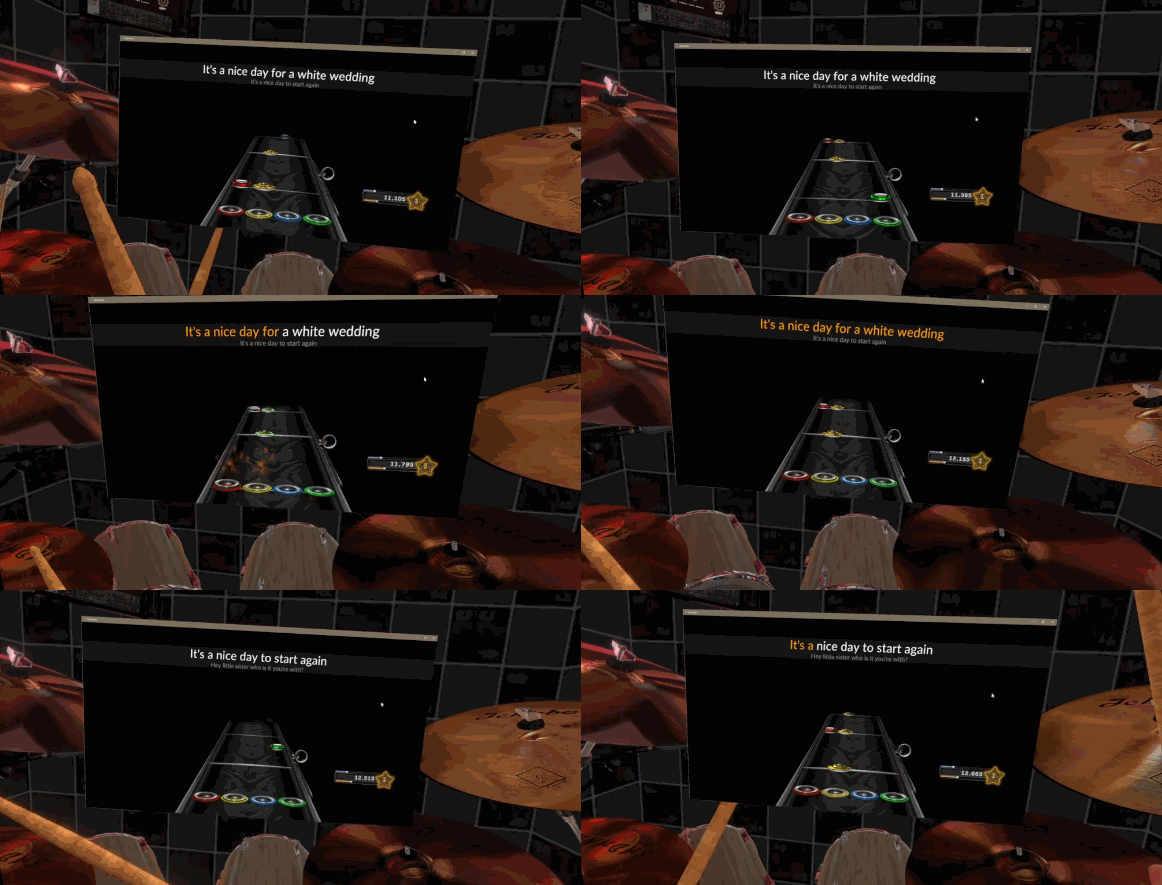
MIDI Setup (PCVR)
There are multiple different methods you can use to communicate MIDI notes out from VR Drums to Clone Hero, YARG, REAPER, MIDI keyboards, synthesizers and more.
-
Easy Option: Virtual MIDI Port
The most easy and common setup is a "Virtual MIDI" port and you need no real MIDI hardware connected, just a PC. Free application loopMIDI.
-
Expert Option: Physical MIDI Hardware
Send output MIDI notes from game to your hardware, which you can route anywhere you like.
When you start the VR Drums there will be an window on your desktop screen with your MIDI devices listed and connected registered in Windows. Select any of them to connect. If you connect new hardware press the Re-Scan Connections button.
Easy Option: Download loopMIDI
A free light weight virtual MIDI port no MIDI hardware needed with loopMIDI, communicate with Clone Hero, REAPER and more. Read below.
1. ) Setup loopMIDI
Install loopMIDI. When the application starts there are no virtual MIDI ports. Click the "+" button at the lower left of the application to create a virtual MIDI port.
2. ) Route Your MIDI Device In Game
Start VR Drums Ultimate Streamer and look on your desktop for the MIDI Router window that appears on screen. These are all your connected MIDI devices, including the one we just made the "loopMIDI Port". Click on the device you want to route MIDI drum notes to, in this case we select the loopMIDI port we just setup. You will see [CONNECTED] next to the device your are currently connected with. If you connect new hardware press the Re-Scan Connections button.
When you connect loopMIDI and VR Drums, hit a drum in the game, you should see the Total Data field in loopMIDI window increase. This is a clear sign things are working, and the notes are being sent to your loopMIDI config.
REAPER Setup (PCVR)
FIrst visit the MIDI Setup section on how to install loopMIDI, which connects VR Drums to a programs like REAPER in-game. If you are using real MIDI hardware you won't need loopMIDI, below we'll show how to connect to REAPER using VR Drums with no real MIDI hardware using loopMIDI. This same process can be followed if you have real MIDI hardware, you will just have to select your midi device instead of the loopMIDI port.
Download REAPER
Install REAPER and run the program. When REAPER first starts you will most likely receive an error message if your MIDI setup is not detected correctly. Click Options > Preferences. Then in the sidebar find MIDI Inputs and MIDI Outputs. Right click and disable any unused MIDI devices and right click the loopMIDI Port and "Enable". Repeat with MIDI output, in MIDI output right click and enable loopMIDI Port.

REAPER Track Setup
To record you'll need to set a track. Click the "+" button in Reaper to create one.

A track will be created, this is what a track looks like and will be added to the Reaper sidebar. Click the red "Record Arm" button. This track will now be ready to record when we are ready to start a recording, but first we must set what we will be recording, see the next step below.

In the track you just created you'll see "Input 1" click the dropdown arrow to expand the options. Set this however you like, but for a quick recording setup just select Input: MIDI > All MIDI Inputs. This track is ready to record MIDI inputs sent from VR Drums, we will come back to Reaper in a moment, see the next step below to enable MIDI in VR Drums.

Start VR Drums Ult.
Start SteamVR and then start VR Drums Ultimate Streamer and look on your desktop for the MIDI Router. These are all your connected MIDI devices. Click on the one you want to route MIDI drum notes, in this case we select the loopMIDI port we just setup.
Back To REAPER
We are ready to make our first .mid drum file. Lets go back to Reaper and click the Record button. All notes now will be recorded that are hit in VR Drums. Hit the Stop button a couple buttons over to the right of the record button when you are done.

You will see the notes from the record now set on the track we created.
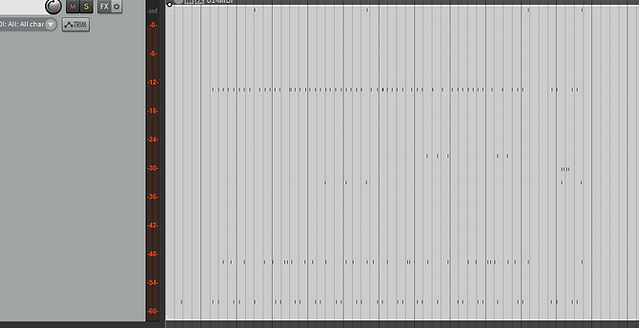
To export your recording as a .mid file, for any .mid player to play, click File > Export project MIDI...

YARG Setup (PCVR)
Process and help setting up VR Drums Ult. to work with YARG as a MIDI controller on Windows.
Initial Setup Required
See the MIDI Setup section first on how to install loopMIDI which connects you to a program like YARG from within VR Drums Ult.
Pin Your Desktop Screen In VR
You have loopMIDI installed and a virtual port running that you created with loopMIDI? Before you start, pin your desktop screen in game using Steam. Push your home button on you left controller. Then in the lower left area of your VR screen is an icon for your desktop display, this is how you will see YARG in game in VR. Click it. When your desktop screen appears, under the screen will be an option called Float In World, see example video.
YARG Setup
1. Launch YARG. Make a new profile, and add a device. Select loopMIDI Port. Set game mode as MIDI Drumkit.
2. Scroll down and click Edit Profile And Binds.
3. Click Binds at the top of the screen.
4. Click the Add button on any drum item listed and hit whatver drum or cymbal in the game you want to bind it to. You can click the Add button multiple times to add multiple drums to one color.
Below are the standard drum colors used on most rhythm games including YARG. You can use any of the drums in VR Drums and bind them anyway you desire.
Yellow Hat
Green Crash / Splash
Red Snare
Blue Tom / Ride
Recording Process
To record videos you can capture both the YARG and the VRDUS game screens separately using OBS Studio or any capture software. If you want your VR screen and the YARG screen combined without capturing two windows side by side in OBS, use the Oculus Compositor Mirror tool. You probably already have this tool if you have Meta Link installed. The Compositor Mirror tool is located in C:\Program Files\Meta Horizon\Support\oculus-diagnostics\OculusMirror.exe. Then capture the Compositor Mirror window in OBS.
Performance
Running VR Drums, YARG, OBS, and Oculus Compositor all together can be taxing on most CPU's and video cards. Lower the YARG resolution and limit YARG's FPS to 30. Lower the OBS bitrate or capture FPS limit and try again.

Fortnite Festival (PCVR)
Process and help setting up VR Drums Ult. to work with FNF as a MIDI controller on Windows.
Initial Setup Required
See the MIDI Setup section first on how to install loopMIDI which connects you to a program like FNF from within VR Drums Ult.
Connection
-
Launch Fortnite and open the main menu in the top right corner.
-
Go to Settings and navigate to the MIDI Controller tab.
-
Verify that your e-kit (loopMIDI) appears under the detected devices list (click Rescan Devices if it does not show up immediately)
Pin Your Desktop Screen In VR
You have loopMIDI installed and a virtual port running that you created with loopMIDI? Before you start, pin your desktop screen in game using Steam. Push your home button on you left controller. Then in the lower left area of your VR screen is an icon for your desktop display, this is how you will see YARG in game in VR. Click it. When your desktop screen appears, under the screen will be an option called Float In World, see example video.
Mapping Drum Notes
-
Scroll down to the Pro Drums configuration area within the settings tab.
-
Select a specific lane or cell and strike the corresponding drum or cymbal in VR DRums so the game registers the distinct MIDI note.

Advanced RAW .mid Note Highway
Removed from v40.7+.
MIDI (Quest)
Testing
MIDI on the Meta Quest is in testing but can still be accessed in-game. Head to the main menu and click the Enable MIDI checkbox. Select your MIDI device from the dropdown list. Multiple convertors have not been tested, please report results.
MIDI has been rewritten and will be enabled on Quest 8/7/26 v35.6+
Connect Your Electronic Drum Kit
Connect the VR headset to your electronic drum kit and have your kit play the sounds.
-
USB-C to USB-A
-
USB-C to USB-B
-
USB-C to USB-C (not tested)
-
USB-C to MIDI Connector
Connect Your Synthesizer
Connect the VR headset to your synthesizer and have your synthesizer play the sounds.
-
USB-C to USB-A
-
USB-C to USB-B
-
USB-C to MIDI Connector
Connect Your Keyboard / Piano
Connect the VR headset to your synthesizer and have your synthesizer play the sounds.
Examples: Casio Celviano, Privia, or basic digital keyboard
-
USB-C to USB-A
-
USB-C to USB-B
-
USB-C to MIDI Connector
Connect Your Phone
Connect the VR headset to your phones MIDI synthesizer and have your phone synthesizer play the sounds. You will run into ownership issues over the cables, some work some don't.
-
USB-C to USB-C (ownership issues)
-
USB-C to USB-B
-
USB-C to USB-A
Connect Your PC
Not supported. There might be a workaround, but we ran into multiple issues.
Performance FPS (Quest)
Some tips to help performance.
Tracking
The only issue you may have on the Meta Quest with performance and smooth gameplay is visual tracking. Make sure your area is well lit so that the Meta Quest tracking cameras on the headset can track your hands smoothly, a dark lit room will cause the Meta hand tracking to possibly miss track your hands and cause a flutter.
Base FPS (FPS 70+)
-
Disable locations.
-
Trash all lights.
-
Disable Shake (Unwanted physics calculations)
-
Lighting Menu > Disable GPU Processing (Unwanted CPU/GPU calculations)
-
Disable legs, drummer body and hands.
-
Record in SD and not HD. (Tablet in-game)
-
Drum builder has an option to Destroy All Stands. Clears all drum and cymbal stands from memory.
Make sure your camera sensors on your headset are clean.
Disable Locations
Disable the locations. Main menu, then locations tab and check the "Disable Locations" checkbox. Drumming with a location enabled can take up to 30% more memory and processing resouces. It is recommended you disable locations to free memory.
To Many Items
Spawning to to many items, drums, and cymbals, can take up memory on the headset. Although you shouldn't have to worry to much about this, as we spawned over 60 items with no issues. Keep an eye on how smooth the game is running at all times with the FPS counter located in the main menu's main tab. Dropping FPS can cause the physics engine to bottleneck and skip a crucial hit.
"Miss a beat, you lose the rhythm. Nothin' falls into place." - Sammy Hagar
For absolute maximum framerate you can use tools like the Quest Games Optimizer. The developer made a profile for the game but we never tested it out yet, if you do let us know. https://www.quest-games-optimizer.com/
Streaming (Quest)
Enter the menu and the "Main" tab. Near the bottom of the menu select "Enable LCK Tablet Camera". Then on the tablet select the "Stream" tab. You will need to download free "LIV Hub" app on your Meta Quest to complete the streaming setup. See the video below for a quick tutorial.
Other Live Streaming Options on Meta Quest (See videos below)
Use Beam XR. https://beamxr.io/
Streaming Using Tablet (Included In-game)
Streaming Cast Quest to PC & OBS
Streaming Using BeamXR
LCK Camera
This external camera is for easy recording and video creation. You can record videos in SD, HD, or even 2K or 4k (Usually reserved for high-end PC's.) With Meta Quest we recommend the SD or HD recording options for best performance.
SD
-
1280 x 720
HD
-
1920 x 1080
Auto Cam
Enable this option to enable the auto camera man. Make sure you press record before checking this option.
Custom Camera Rotation (Meta Quest)
Enable this option to set three locations for a static camera angle. The three positions will rotate among themselves.
File Location
PC will record to your Videos folder and Meta Quest will store to /Movies.
In-Game External Camera (Action Cam)
PCVR has a special external camera you can use to capture your drumming with external apps like OBS.
Performance FPS (PC)
An up to date PC with a powerful graphics card is recommend for smooth gameplay. Having 60+ FPS at all time is a requirement if you want to drum smoothly. Head to the menus main tab to view an active FPS counter. We strongly recommend a solid 70+ FPS because dropping frames is something you don't want to be doing while drumming in VR, and will lead to failed physics calculations that are called in that frame, and you will most likely experience odd behavior, skip a beat etc. To prevent dropping frames and running the application as smooth as possible, see possible solutions below.
Base FPS (FPS 70+)
-
Disable locations.
-
Disable all lights.
-
Disable Shake (Unwanted physics calculations)
-
Lighting Menu > Disable GPU Processing (Unwanted CPU/GPU calculations)
-
Disable legs, drummer body and hands.
Disable Locations
Disable the locations. This is the quickest way to grab more FPS instantly. Main menu, location tab and check the "Disable Locations" checkbox. Drumming with a location enabled can take up to 10% to 30% more memory on your GPU depending the location. It is recommended you disable locations to free memory.
Close Background Applications
Close idle background applications on your PC that are using up extra unnecessary memory, CPU cycles, applications on your computer that are running in the background.
Tracking
Sensors are clean and aligned calibrated for best tracking on USB 3.0 connection for max data transfer.
SteamVR Adjustments
-
Render Resolution: Set to "Custom" and reduce to 100% or lower (e.g., 80-90%) to significantly boost performance.
-
Refresh Rate: Lower the Hz (e.g., from 120Hz to 90Hz or 72Hz) if your PC cannot maintain the higher frame rate.
-
Motion Smoothing: Turn this OFF to reduce latency and improve performance consistency, especially if it causes stuttering.
-
Per-Application Video Settings: Access these to lower resolution or fix frame rates specifically for demanding games.
-
Alternative (Oculus Users): Set the OpenXR Runtime to Oculus in the Meta Quest Link app to bypass SteamVR for better performance.
-
In-game Mirror: Turn off or minimize the PC monitor mirror of your VR game to save GPU resources.
-
Additional Tips:
-
Ensure your GPU drivers are updated.
-
Close unnecessary background applications to free up CPU/RAM.
Recording OBS high quality, high framerate video on top of running VR Drums Ult. and SteamVR all together requires a lot of resources and memory on your CPU/GPU/Memory, and go hand in hand with performance concerns while drumming, see the Recording Videos section below for help on recording videos.
Graphic Card Adjustments
Use tools like Nvidia Control Panel to lower multiple graphic settings on your video card to free up memory and gain more FPS. Lowering some of these settings can have a significant increase on performance.

Nvidia Control Panel.
Recording Videos (PC)
You can use any video recording software or method you like, we record our videos using OBS Studio. You can also stream to Twitch or any platform including YouTube with OBS Studio.
Best Recording Method
It is significantly better to record OBS video to a separate physical drive than the one running your operating system and game. Using separate drives prevents the drive from struggling with simultaneous heavy read/write tasks, reducing the risk of dropped frames, stuttering, and improved in-game FPS.
Key Considerations
-
Performance Bottleneck: Recording creates a continuous stream of data. If the game and the recording share the same drive, they compete for bandwidth, causing the drive to "jump" back and forth, which can slow down performance.
-
SSD vs. HDD: Ideally, use a fast SSD for both gaming and recording. If you only have one SSD, record to a separate HDD. If you have two SSDs (e.g., M.2 or SATA), that is the optimal setup.
-
Drive Type: Avoid recording to slow external USB drives, as they might not handle the high write speed, leading to choppy footage.
-
Exceptions: If you are using a very fast, modern NVMe SSD for both (e.g., a Gen4 drive) and are not recording in extremely high-bitrate, uncompressed, or 4K/60fps formats, you might not see a huge performance drop. However, keeping them separate is best practice for reliability.
Performance
Capturing videos can be demanding on your PC/CPU/GPU and will bottleneck physics calculations in-game if your drop below 60FPS. Tune your capture settings and computers performance. We can help with some various tips in the Performance section. We recommend a lower video bit-rate if you notice FPS drops while recording. Below is the video settings we found to be a good balance for recording while in VR, they may need to be lowered even more depending on how powerful your PC is. Play around with OBS and the "Output" and "Video" settings for best performance while capturing video. See below for what we use. Some PC setups may capture video better with different "Video Encoder" options, the "Hardware" option uses your GPU to capture video, while the "Software" options captures video using your CPU, see what one works best for your PC setup.
OBS Standard Settings
Settings we use to record standard videos in-game. Example video recorded with these settings.

OBS Output settings.

OBS Video settings.
OBS Slower PC Settings
OBS recording settings that we recommend for recording on slower PC's. Example video recorded with these settings.

OBS Output settings.

OBS Video settings.
Recording Videos (Meta Quest)
Use the included Meta screen capture tool included on all Meta Quest to record MP4 videos. Visit the "Main tab" in-game for other recording tools like the third person tablet camera that will use an external camera to film and save .MP4 video files to your Quest galley.
Video demonstration on how to record videos on Meta Quest using the already installed Meta screen capture https://www.youtube.com/shorts/6tmLLwSBS5g
Custom Clone Hero Song Support
Help with adding your custom songs to play on the note highways, Quest and PC method below.
>> Quest Custom Songs
Supports notes.mid + notes.chart (Moonscraper & Clone Hero)
Place your custom song folders in the location below, or just the songs .ZIP file! You don't even have to unzip them anymore!
sdcard/Documents/CustomSongs
Enter the main menu and select the SCAN SONGS folder, a Meta Quest popup will appear, make sure the popup path shown is sdcard/Documents/CustomSongs, and click "Allow". Your songs are imported into the game ready to play. Press your right controllers "Meta" button to return to the game. You will have to create the "CustomSongs" folder in Documents. See video below.
What's Not Supported: songs.opus audio files. 7zip zips, WinRAR compressed files. If you run into a song folder with no audio stems, they are most likely .opus format.
Scan Songs Button: This button will scan song folders you added to /Documents/CustomSongs folder and add them to the games collection. Songs will be send and viewable in the appropriate highway browsers.
Supported
.chart -- Clone Hero / Moonscraper (2D / 3D Highway)
.mid -- Clone Hero / Moonscraper (2D / 3D Highway)
.rlrr -- Paradiddle Custom Chart (.RLRR Highway)
NOTE: This will play 85% of your song folders, some song folders may contain a sync bug error we are getting resolved asap.
NOTE: You will have to create the "CustomSongs" folder in your Documents folder. An easy way to create folders on your Quest is using a free VR file manager like AnExplorer VR File Manager. See video below.
>> PCVR Custom Songs
With PC you add custom songs anywhere then just find them in the browser in-game.
1. Load game and enter the main menu, then select one of the note highways.
2. Find your songs in the browser that appears. Use the "Directory Up" button at the top of the song browsers to search all your file folders on your computer. Find your custom song folder select it and select an audio stem to begin.
Single-track song folder example. Greenbay - Halo

Multitrack song folder example. Drums will not be played, you will hear the drum sounds as you hit notes. You are the drummer now.

"Song Folder" commonly used term in rhythm gaming. Each song will have to be in its own folder. These are "song folders". The 2 images above show what can be in each one.

What is a "Song Folder?"
Song folder is the term used in most all rhythm games including Clone Hero, it's just a single folder, they contain all the files needed to play that custom song. They follow a standard format, below are the 3 required files you need in your song folder to play.
Minimum Required Files Details -- Clone Hero / Moonscraper Song Folders
album.png (or album.jpg)
notes.mid or notes.chart (Must be named notes)
song.mp3 (Any audio file. Song name and extension don't matter .ogg and .wav audio is also supported -- music.mp3, if you see no audio stems when you click into a directory, it's because that charted converted the audio to .opus audio currently wont play)
song.ini
If you see no notes make sure you select "Expert" difficulty in-game, most charters only chart for the expert track and they will leave the others difficulties blank. If you still have issues playing the chart file, see bug details the chart file might have itself, for possible fixes.
Extra [Song.ini] Not required
Some charters will leave a song.ini file in the song folder, what does it do? It stores song information like title, artist, and who charted the notes for the song etc. You can add these files yourself if the charter did not include one. This is the information that displays on the scoreboard, while some charters might of embedded the information inside the .chart or .mid file itself, both will display on the scoreboard.

Select one of the note highways buttons on the main menu and the note highway song browser will appear. Select SCAN SONGS.

If you are on PC click the "GO Directory Up" button to search your PC's file system and locate where you have saved your song folders.
When you select the note highway button using your Meta Quest, the note highway file browser in-game will load up. Use the DIRECTORY UP button to gain access to your PC folders.
Note: If you run into an issues with a chart loading, you can head to the DV tab and click soft reset to quickly reset the game.

Highway Gameplay
The guides are the neon color rings on a drum or a cymbal when you switch to any of the 2D highway modes. This can help if you are having trouble with what note on the highway coordinates to what drum you should hit. This effect can be enabled or disabled, find the options in main menu then the "Drum Builder" tab. Cycle it if you add new drums and want the guides on them as well.
See the 3D / 2D Note Highway section for scoring informations.
Create Drum Charts for the Note Highways
You'll need a PC to create drum charts. Below are a couple of chart editors that can be used to chart a drum chart to any song you wish. You can Google some tutorials on how to use them. These styles of charts are more commonly known as "Clone Hero" drum charts.
Moonscaper Chart Editor (Recommended)
Free Chart Editor (VR Drums compatible). Popular and widely used chart editor you can map your own drum chart to any song. This is the application used to chart the included songs in-game.
FeedBack Chart Editor
Free Chart Editor (VR Drums compatible). Lesser known chart editor.
We have a short guide on how to chart for the for the FeedBack Chart Editor in the old alpha help guide on the ACC GitHib page, but we recommend using Moonscraper. See Add Custom Songs section on how to load these custom drum charts in-game and play them.

Moonscraper. (See Links/Tools)

3D Note HIghway
Extra Settings
Below are some extra options you can find in the menu and sub menu tabs.
Shake (Rack Shaking) > Drum Builder
Disable this option to disable the drum racks from taking hit resonance that cause the rack to shake. Disabling this option can increase FPS slightly.
Disable Force Feedback Battery Saver > Main Menu
Disable all rumble motors on controllers. This will increase usage time and prolong battery life on each controller.
Walking > Main Menu
Enable standard walking and movement style controls using the analog sticks. This feature has been reported to have some bugs, if you notice the rotation may stop working. This will cause a memory leak in game and cost FPS. If you notice a FPS drop while using this option, and the rotation on the right analog stick stops working, disable this feature.
Grab Sticks > Main Menu > Sticks
Enable this to unlock your sticks from your hands. You can then grab the sticks with whatever angle you desire with the grip buttons on your VR controllers. Hold the grips and get the sticks how you like and uncheck this option to lock your sticks into place.
Cycle Physics > Main Menu > Sticks
In vey rare situations you may lose the ability to hit anything with your drum sticks. If this happens clicking this button will cycle the physics and clear up this issue, allowing you to strike again.
Disable Hi-Hat Sustain > Main Menu > Extra Settings Button
This will mute any clashing of the cymbals and sustain coming off the hi-hat when the foot pedal is released.
Soft Reset > Main Menu > DV / Extra Tab / 3D Highway Browser
This option is here if you run into a bug, or a soft lock. Press the "Soft Reset" button to quickly refresh the scenes settings and start from scratch. This option will skip the boot room and load you right into the game, saving you about a minute or two from restarting the game manually.
Edit Mode
Entering Edit Mode is how you can change and customize your setup. To enter Edit Mode, press in the left controllers analog stick, Edit Mode will enabled. When Edit Mode is enabled, there will be a blue gear that will appear on each drum/cymbal. Place your left hand over the blue edit gear, the drums Edit Menu will appear. When you're done with Edit Mode, press the controllers left analog stick in again to exit Edit Mode.
Recording Demos for Replay (Temp Removed)
The demo recorder is under development, but works pretty well at its current state. Record a replay of yourself drumming. These are called demos. A demo replay is stored into a single file drumDemo.replay that you can share with other players or backup for yourself. Follow the instructions below to record a demo.
Your demo folder should contain 2 files. The replay file and the music.ogg you played while drumming. For PC if you did not included a music track just included the drumDemo.replay file. On the Meta Quest include the music.ogg even if you have no music, make the file blank or an audio description or introduction to your demo. Music or an audio file you use must be renamed to "music.ogg".
Each demo should be in its own directory, with the 2 files below.

drumDemo.replay - The replay file.
music.ogg - Music/Speech included.
Replay Save Location
Meta Quest android/data/com.aliencybercoat.vrdus/files
PC C:\Users\Username\AppData\LocalLow\Alien Cyber Coat\Files
To play a replay file, enter the Main Menu and head to the DV Tab. Check the "Demo Recorder" checkbox. The browser that pops up is the demo browser, find your demo files and select them to play. See the image above on what should be in each demo folder.
The kit the replay was recorded on must be selected and loaded in-game before playing the demo. You should include a text file in your zip of your demo that list what kit you used to record the demo with.
A example demo is included on both versions and was recorded on the default kit.
Skipping Hits and Missed Hits (FPS)
This is a crucial recommendation, you do not want to drop below 60/70 fps.
The game should never miss a hit, if you do, this is a sign of frames dropping. Head to the main menu tab and take a look at the FPS counter located near the bottom of the menu. This is a live FPS count. We recommend 70+ FPS for smooth drumming. It is very possible for the game to miss a hit or misbehave, only if you drop below a steady 60 FPS and are having performance frame-rate hiccups. Dropping FPS calculations will drop crucial physics calls that are performed in that FPS frame, which could of been a hit not calculated by a missed frame. This is usually a PC problem more than a Quest issue due to lower end CPU's / GPU's (3D video card). See below for solutions and performance tweaks.
Performance Tweaks
-
Disable locations. (Calls a ton of unneeded draw cells calculations)
-
Disable all lights.
-
Trash all spawned lights.
-
Disable Shake (Unwanted physics calculations)
-
Lighting Menu > Disable GPU Processing (Unwanted CPU/GPU calculations)
Tracking / Lighting
On PC ensure sensors are clean and aligned calibrated for best tracking on full speed USB 3.0 connection for max data transfer.
On Meta Quest make sure the tracking cameras on the headset are clean and your room is well lit, a dark lit room can cause the Meta tracking cameras to flutter or incorrectly track your hands.
Frame Rate Issue Still?
- PC is not fast enough.
- Close and quit all background applications running that use unwanted memory. Firewalls, any scanners.
- Programs like OBS with to high bit-rate settings for recording options demanding a large 30% CPU or more. Try lowing the frames captured to 30 FPS and lower the video recording resolution and bit-rate to around 1600 or lower.
- Tweak and lower your GPU's quality settings for more FPS with Nvidia Control Panel or similar GPU tools.
- Disable any in-game overlays such as Steams mounted desktops, calling for nearly double the memory used while playing.
- To much in-game items, to much lighting effects spawned or enabled.
- The in-game video player can lag the game depending how large the video stream is and may be to much demand on the PC and may hiccup FPS. Try using the audio player which requires a lot less memory.
- Disable locations in the "DV" tab, to free texture and model memory from your GPU and increase FPS.
Aim?
If all these things above are fine, and you are running 70 FPS and are still missing hits, it might not be the game, I've done this myself, keep a close eye on the range of the tip of the stick and really try to aim each hit right where it needs to be, it's easy to miss an edge or a cymbal or drum just slightly and still believe you hit it, the sticks with the red LED tips can help with aiming and striking. Use the "Manual Size" option to size up the hi-hat or other items that might be to small and are causing you to miss a hit. Visit the "Sticks" tab and select the "Grab Sticks" option, grab or re-align your sticks how you feel comfortable holding them for accurate strikes. These settings will save with any kit. These are just some tips that helped me over the years.
Note: A good example of frames dropping below performance rates... you hit the snare at max strength, but it registers the hit like you striked it softly or just barely. This is a usually sign that FPS are not fully stable and probably need to be increased for accuracy. You will also start to see the cymbals slow down like they are moving in slow motion, while the physics simulation bottlenecks in lost/dropped frames and the CPU is trying to catch up.
Tools
Quest Optimizer
(Not required, but can boost frame-rate of all your Meta apps)
The dev of the Quest Optimizer has made a special profile just for VR Drums Ult. but we have not tested it out ourselves.
Nvidia Control Panel
Lower default performance options on your video card to increase FPS.
Item Customization Options
We tried to list them all but there is some customization options we missed, if you have a question on anything join the Discord.


Tuning
(Located in Edit Mode) On: Most items.
This adjustment will change the size of the item and affect the overall sound. Tune up for higher tuning and down for lower tuning. If the auto sizing on the tuning wasn't correct and you want to fine tune an items size after tuning use the "Manual Size" option. SEe below.
Manual Size
(Located in Edit Mode) On: Most items.
Trouble hitting something? To small for aim? Change the size of the item without effected the tone. We use this mostly on the hi-hat.
Add Damper
(Located in Edit Mode) On: Most items.
Will lower the volume of the item. Raise the damper to lower the volume. Lower the damper to raise the volume.
Cross Stick
(Located in Edit Mode) On: Snare 1 and 2.
Enable cross sticking on the snare drums. Lay tour left hand near the snare drum, and tap the drum stick onto the rim. You won't have to flip the stick. Example video of cross sticking.
Drum Pad Mod
(Located in Edit Mode) On: Snare 1 and 2 and other drums.
This setting is enabled by default and involves use of the graphical drum pad decals that lay over a drum head. Having this option enabled will apply a drum decal over the drum head when "Drum Pads' are selected in "Drum Builder".
While this setting is enabled, selecting different drum pads will change the drum pad decal of the selected drum.
if the "Drum Pad Mod" option is disabled, the drum will be excluded from "Drum pads" in the "Drum Builder". If you already applied a pad to the drum, and then disable "Drum Pad Mod", selecting different drum pads will not apply to this drum.
You can apply multiple different decal arts to different drums using this option.
Metal Color
(Located in Edit Mode) On: Snare 1 and 2, all toms and most drums.
While "Metal Color" is enabled, the metal hardware of that item will change when you select a metal color in the "Drum Builder". If "Metal Color" is unselected the drum will be excluded from any new color metals selected in "Drum Builder" and the paint will be set.
Tension
(Located in Edit Mode) On: Most items.
Every drummer plays a little different when it comes to their cymbal tension setting. This is basically how much you want your cymbal to move around when you hit them. You can adjust most all of the cymbal tensions in "Edit Mode". Press the left controllers analog stick in to enter edit mode, then place your left hand over a crash cymbals mod gear, the instruments "Mod Menu" will appear, lower and raise the desired tension. The higher the tension, the less movement that cymbal will have. All tension settings will save and load with your kit and have tension display values.
Rack Stand
(Located in Edit Mode) On: Most items with a default rack attached.
Disable this option to remove the default rack stand part included with the item. Useful if you want to use your own racks.
Flip
(Located in Edit Mode) On: Ice Bell and Z Bell.
Enable this option will remove the rack stand from the item and flip the bell so it can be mounted on top of anything you wish. These inverted bells are usually placed on top of a crash cymbal.
Remote
(Located in Edit Mode) On: Spare Hi-hat.
Enabling this option will allow open and close control of the spare hi-hat via the left controller primary button.
Open/Close
(Located in Edit Mode) On: Spare Hi-hat.
The spare hi-hat spawns clamped at default. Enable or disable this option to set the default position of the hi-hat.
Speed Snare
(Located in Edit Mode) On: Snare 1 and 2.
The default physics on the snares are cleaner but do have less response with really fast snare rolls. Most players won't need this option on and we recommend it off. If the snare is not sensitive enough at default, enable this option. This is a recommended mod by Jeremy. This setting saves/loads with kits.
Ride Crash
(Located in Edit Mode) On: Ride Cymbal.
Enable to crash the ride. You'll really need to give it some strength. This setting is enabled by default. There are 2 settings for strength, low (default) easy hit and high, for max swing strength. You can disable the ride from crashing all together in the ride cymbals Mod Menu "Ride Crash" checkbox. These settings save / load. This is more of an expert setting, with "Ride Crash" enabled you have be more aware of the strength your hitting the ride every hit.
Required Strength
(Located in Edit Mode) On: Snare 1 and 2.
Lower this setting to require less striking strength for a max hit on the drum head.
Hit Strength
(Located in Menu) On: Sticks tab.
Raise this setting to alter the physics engine and apply more power to cymbal strikes in return making them swing more. This setting saves/loads with kits.
Pro Rack
(Located in Edit Mode) On: Crash Cymbal.
This is a more professional crash cymbal arm / stand with 2 positioning arms for rack placements.
Custom Image Packs (Image Templates) (Quest)
Quick Start
This is a DLC addon, you can find it located in the store. You will need a PC or mobile phone image editor. When you own the Custom Art addon download the image templates. Mod them how you like using your favorite image editor.
What Are These?
Custom art packs are a set of images that are stored in a single directory / folder that can be loaded all at once and applied to any kit. These custom images contain various custom image skins. These packs are artistic in nature and can be anything that you design using the included image templates and your favorite image editor like Photoshop or GIMP. Download the zip of the custom pack image templates in the Links / Tools section. Below is an example of Neil Peart's Time Machine drum kit, along with some other custom images testers are currently working on.
This custom image templates are universal, PC users can apply Meta Quest users art packs, and Meta Quest users can apply PC user images, no special mods of the image files need to be done, the custom images are fully cross-platform.
Q: Where Do I Put Custom Art?
SDCard/download/
Example 1: SDCard/download/MyA7XKit
Example 2: SDCard/download/MyRockArt
Example 3: SDCard/download/MyPunkKit
You can name the actually custom art pack folder anything you like as seen above "MyA7XKit" etc.

%20snare.jpg)


No PC Option
1.) Get The Image Templates
Download the image pack templates to your phone or tablet so you can edit them. Place them in a folder any name "My Custom Kit 1".
Free Mobile Image Editor Snapseed (Use any mobile image editor you like.)
2.) Transfer Your Custom Art Folder To Your Meta Quest
Now the folder we just made with all the images in it, we need to get this folder onto your quest into the downloads folder. You can do this anyway you like, send yourself a DM in Discord with the images, or send them to yourself in an email, and use the Quest web browser to download them.
3.) Load Your Art Folder In Game
We have to find your "My Custom Kit 1" folder we transferred to Downloads now. Load the game, bring up the config menu and go to the Drum Builder tab. Click Custom Art Packs, a browser will appear and list the Download folder location on your Meta Quest. Select the folder that contains your custom images in this browser and the art will be applied.
PC & Meta Quest Transfer Option
Connect your Meta Quest to your PC with a USB cable. Use the free Windows application SideQuest or your own PC's file browser to transfer your custom images folder. Transfer your entire custom image folder to your Meta Quest Download folder.
Q: Does Custom Art Save With The Save File?
Art applied to any saved kit will indeed load up for you every time you load the kit, as long as you keep that art folder in place on your Quest. If you want your friends to load up the art along with a kit save file you share, they just need to place your custom art folder on their Meta Quest download folder, and when they load your save file with the custom art, it will load the art for you as well.
Q: I Can Load Art To Any Kit? Share With Friends?
Any kit. Your past saves, or new builds. Even share the art file with friends or post online, all they will have to do is drop your custom art folder in their Meta Quest downloads folder.
Browser Option: Hide Drum Head
Some drum pads use (.PNG) transparency options with a cutout design and require to see the drum head/color under the drum pad decal for full effect. While other creators do not. This option will remove the original drum head. This option can be useful if you are creating a single transparent drum head, and do not need to see the default drum head under it.
Creator Options
Some options for creating / editing the image templates.
Opacity / Transparency
The image above of the A7X kick with the vents in the kick head, this is an example of using opacity or layers with the image templates. Most the image templates are .PNG format with an alpha / transparent layer. Feel feel to use multiple layers in the image as well as alpha cutouts, opacity, and transparency. Area's of the image left blank or with opacity lowered will be invisible when applied in-game. This can allow for all sorts of cool design options.
Image Resolutions
Feel free to size the dimension (resolution) of the template images higher or lower, to your liking. The size of the final images won't matter.
-
High Resolution
Feel free to size the dimension (resolution) of the template images higher or lower, to your liking. The size of the final images won't matter. It's recommended you leave the resolutions as they come for best performance.
-
Low Resolution
Lesser image quality, but faster performance. Less demand on slower PC's.
Example: Below are all the images included in a full custom art pack. Download the latest templates in Links / Tools.
Details
this is a zip file containing 19 image templates. These are the images you will modify, paint over, or copy and paste your custom images onto. Modify them how you like and just overwrite the file, keeping the file names as they came in the image templates. Example "drumpadsback.png, tom3.png etc. Make sure to place all the images from the image templates you edited into a single folder / directory. Call it whatever you want to remember what art pack it is, example "My X-Men Kit", "My Rock Templates". If you cannot put them into a folder yourself you can use AnExplorer VR File Manager.

Custom Image Packs (Image Templates) (PC)

%20snare.jpg)


Quick Start
Download the image templates. Mod them. Place them all in a single folder, example "My custom kit" it can be named anything. In game select config then drum builder tab. Click Custom Art. Find your folder with the image templates in the browser. Select it.
What Are These?
Custom art packs are a set of images that are stored in a single directory / folder that can be loaded all at once and applied to any kit. These custom images contain various custom image skins. These packs are artistic in nature and can be anything that you design using the included image templates and your favorite image editor like Photoshop or GIMP. Download the zip of the custom pack image templates in the Links / Tools section. Above is an example of Neil Peart's Time Machine drum kit, along with some other custom images testers are currently working on.
This custom image templates are universal, PC users can apply Meta Quest users art packs, and Meta Quest users can apply PC user images, no special mods of the image files need to be done, the custom images are fully cross-platform.
1.) Get The Image Templates
Download the image pack templates to your phone or tablet from links / tools, this is a zip file containing 19 image templates. These are the images you will modify, paint over, or copy and paste your custom images onto. Modify them how you like and just overwrite the file, keeping the file names as they came in the image templates. Example "drumpadsback.png, tom3.png etc. Make sure to place all the images from the image templates you edited into a single folder / directory. Call it whatever you want to remember what art pack it is, example "My X-Men Kit", "My Rock Templates".
Custom Art Browser
Main Menu > Drum Builder > "Custom Art Packs" checkbox. This will bring up the Custom Art Pack browser. Find the folder that contains all your custom art and select it. The art will be applied to any custom drum kit.
Q: Do the save files pack in the graphic art files?
No... You must select the pack in the browser in-game, saving the kit will re-apply it automatically if you saved it after you applied an art pack.
Browser Option: Hide Drum Head
Some drum pads use (.PNG) transparency options with a cutout design and need to see the drum head/color under the drum pad decal for full effect. While other creators do not. This option will remove the original drum head, this setting will save with the kit. This option can be useful if you are creating a transparent drum head, and do not need to see the drum head under it.
Load Custom Images On Any Custom Drum Kit
Head to the the "Drum Builder" tab and select the "Custom Pack" button. This will bring up the custom pack browser, find your custom pack folder on your PC that contains the images you are using, and select it. The contents that the creator added to the directory will be loaded to your drum kit.
Creating
Opacity/Transparency
The image above of the A7X kick with the vents in the kick head, this is an example of using opacity or layers with the image templates. Most the image templates are .PNG format with an alpha / transparent layer. Feel feel to use multiple layers in the image as well as alpha cutouts, opacity, and transparency. Area's of the image left blank or with opacity lowered will be invisible when applied in-game. This can allow for all sorts of cool design options.
Image Resolutions
Feel free to size the dimension (resolution) of the template images higher or lower, to your liking. The size of the final images won't matter. It's recommended you leave the resolutions as they come for best performance.
-
High Resolution
Better quality images but less performance on slower PC's. A full art pack at default resolution can take up to 35mb in memory. If you are on a slower PC, you might want to lower the image quality of the custom pack image templates.
-
Low Resolution
Lesser image quality, but faster performance. Less demand on slower PC's.
Example: Below are images included in a full custom art pack. Download the latest templates in Links / Tools.
Using LIV (PC)
This is the same method used by various Beat Saber content creators. It allows for a wide range of custom VR avatars that can be used on both the drum set and the note highways including the 3D note highway. LIV will also allow adding a real video stream of yourself into any VR game as the avatar, VR Drums Ultimate Streamer supports LIV. There are steps below needed to get it working.
1. Download LIV on Steam, it's free!
2. Now let's launch VR Drums Ultimate Streamer in Steam. Once the game is loaded enter the main menu and select the Enable LIV checkbox.
3. Launch LIV from Steam, when LIV starts up select "Guest". Then "Virtual Cameras & Avatars", see image below.

4. Then select CAPTURE and set VRDUS.exe as the "Target".

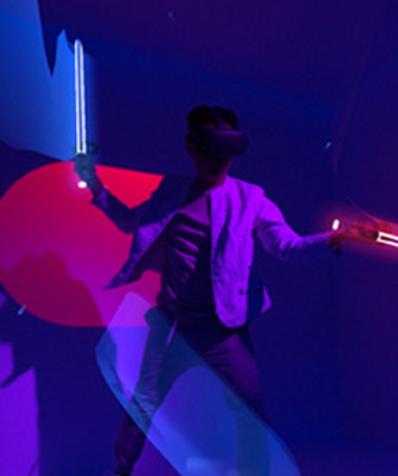
When you select VRDUS.exe as the target, you should see VR Drums Ult. now appear in your LIV display window on your desktop. You will also see a LIV logo in-game inside your VR headset on the floor below you, but before we do anything more, make sure to disable any avatar parts like hands or the head that VR Drums Ult. supplies by default, because we are going to apply a full custom avatar next.
Steps For Adding Your Custom Avatar File
1. When you download an avatar file from the internet it will most likely be a zip file. Extract the zip file and the .avatar file from it anywhere on your PC.
2. Drag and drop your (.avatar) file right over the LIV application window. LIV when then prompt you if you want to install the avatar to your avatar collection.
Selecting Your Custom Avatar In-Game
To apply a custom avatar file. Look straight down in-game at the floor and you'll see a green LIV logo, select it and use the LIV menu that appears to select your avatar and external camera.
In the LIV menu select "Camera" on the far left on the menu and then "Selfie Cam". Use whichever camera option you like best for your scene. You can grab the LIV selfie camera and place it anywhere in the scene. Select "Avatars" in the LIV menu. You'll see some avatars that came included with LIV, and if you keep scrolling you'll also see the custom avatar files you added.
Performance
For performance increases lower the capture resolution with the "Output" option.
Download Avatars
Search for any (.avatar) custom avatars online, or find them on community pages like https://modelsaber.com/Avatars/

Example of a LIV custom avatars in VR Drums Ult.
Load Other Players Custom Kits (PC)
You can load other players kits by just dropping their single save file "CustomKitData.bin" into one of your save slot directories.
Note: PC and Meta Quest save files differ from one another. PCVR can only load PC save files and Quest can only load Quest save files.
When you save your drum kit to a save slot in-game, the entire kit and its custom settings are stored in a single file "CustomKitData.bin". Save kit files are usually under 1Mb in size and are easy to transfer around being a single file under 2MB, they contain no personal information about you or your computer, they simply contain the information of your drum kit setups, customization options and scene settings.
All your save files can be found on your PC at Users\Username\AppData\LocalLow\Alien Cyber Coat\Files

You can power off the game your save files are saved to your computer and will be available to select them each time you play. You can backup this files if you wish or share them.
These slot directories are also where you place the custom drum kit file "CustomKitData.bin" you want to load, if you downloaded one from the forum, or someone share the file with you. Place the "CustomKitData.bin" file in any of the directory slots numbers.
If you didn't save a kit yet, these folders won't be there and you will need to make them yourself, or just save a kit in-game and the game will create that folder slot for you. If you placed the kit file in Slot_1 directory folder, return to the game and click the "Load" disk button from Slot 1 within the game, if you placed the kit file in Slot_2 directory, click the "Load" disk button from Slot_2 in-game etc.
When you save a drum kit in-game to a save slot "Slot 0" it will save the file in a subdirectory labeled that. Slot 1 will be Slot_1 etc.
3D Note Highway
Warning the 3D note highway will exit the regular drum simulator. The 3D note highway will play any Clone Hero song folder and is now updated to sync to any song length unlike previous versions that struggled with it in the past, this issue has been cleared up in v32.5+. Play single or multitrack songs. Select the song folder in-game and then select song.ogg. The drum audio track will be removed for you if using a multi-track song (song.ogg, vocals.ogg, etc.) and you will be the only drummer heard.
Where Are The Songs
You must add your own "Clone Hero" drum charts (.mid or .chart format). See "Add Custom Songs" section. There thousands of charters who chart for Clone Hero drums. The song must include a drum track.
Required Files
notes.mid or notes.chart. album.jpg or album.png, (the audio files) song.ogg .mp3 .wav can be any of these formats. These 3 files must be in a song folder. Check your song folders. They are commonly song.ogg, vocals.ogg, guitar.ogg etc. You can leave folders how you get them. Also song.ini.
Gameplay
You will see stance position footprints on the floor, place yourself near them standing or in your chair, it won't matter we play both ways. Press the analog sticks in to raise and lower your player. You align yourself to where you feel comfortable, each player plays slightly different here, arm lengths, etc. Hit the notes as soon as they pass over the hit-line on the floor in front of you. See more below.
Chart Conversion
VRDUS will create and convert any of your notes.chart files into notes.mid when you select then in-game for scoring features. The newly created notes.mid will be placed into the song folder and will be converted using the notes.chart file. The original notes.chart file will remain in the folder as well.
Features
A note hit close to the hit-line. Standard points.
How many hits in a row. Will drop when you miss a hit. To reach a new streak, you will have to reach your past streak. The streak count will be displayed in-game.
Combo will work towards your streak. A combo starts once 5 or more notes are hit without a miss. It will continue to count add add bonus points each hit during a combo. When the combo reaches your last streak, it will save the combo as a "Streak". Also know as max combo depending the game.
Your max combo count will continue to score extra points.
400+ MaxCombo - 8X scoring.
300+ MaxCombo - 6X scoring.
200+ MaxCombo - 4X scoring.
100+ MaxCombo - 2X scoring.
Double scoring will start every time your combo reaches 100 and beyond. While you are in double scoring mode, the highway will turn to gold. Each hit will collect extra scoring points.
A hit on the hit-line with near perfect timing. Bonus points each perfect. A perfect bass hit will highlight the hit-line area green. Regular hits will display a "Perfect" inside the lane.
How many hits you missed over the hit-line.
+1,000 extra bonus points added each cross-hit. A cross-hit counter is added to the scoreboard as well. What is a cross-hit? Hit any drum with the opposing drumstick on the 3D highway, you will see +1,000 bonus spawn, and added to the scoreboard. Example, the crash note on the 3D highway is located far right and is normally hit with the right hand, a cross-hit would be doing something most players don't do, which would be crossing your left hand over to hit the crash note, this is a cross-hit. These are style points, they look cool in-game and are a little harder to pull off, you choose when a cross-hit is good for you, it's a good way to out score another player by using as much cross-hits as you can, even if the other player perfects every note, you can get a higher score with using more cross-hits.

+1000 points will appear when you cross-hit.
Select Easy-Expert. Each setting with spawn the selected difficulties note pattern. Most charters only chart for expert, but not always, medium is a great level for everyone usually, cycle option in-between sets and try them all. Expert charts usually contain a lot more notes and it's recommended to raise the "Highway Speed & Note Spacing" to keep them spaced apart and easier to play, see below.
This is needed if you find your notes layered over one another, to close to on another. Raise this setting to spread the notes farther apart on the highway, lower is to bring them closer together. If the notes are scrolling to fast, lower this setting. If the notes are scrolling to slow for you, raise this setting.
Each note hit adds score. A perfect hit, combo hits and max streak all add extra bonus points to the final score. Missing a hit will subtract some points. At the end of each song a final grade will be displayed. An A+ can only be reached if you miss 0 notes.
The accuracy graph will appear at the completion of each song. The graph will display your perfect hits, near hits, and misses. There will also be a total percentage accuracy calculated. See below for detailed information.
A - You will need 90% or better accuracy with less than 6 notes missed.
B - At least 70% accuracy.
C - 50% accuracy.
D - Low accuracy. Raise the speed / note spacing, or lower the difficulty if the charter included extra difficulties with the song.
-
Star Ratings
✮ Gold Star -- 1 Stars (Fair)
✮ Gold Star -- 2 Stars (Good)
✮ Emerald Star -- 3 Stars (Great)
✮ Osmium Star -- 4 Stars (90% accuracy or better)
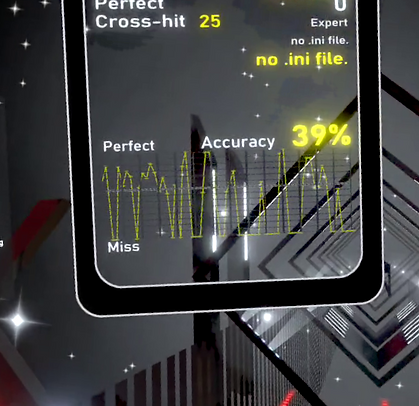
Accuracy
This accuracy graph will calculate at the end of each song. The graph displays the songs length from beginning to end with your progress along the way. These points will appear relative to how close to hit each note to the hit line (on time).
A point at it's highest is a perfect hit, any point near the middle is a near perfect hit but a little off timing. A point all the way at the bottom of the graph is a missed it.
Accuracy Percentage
Along with the detailed stats shown on the graph is a overall average accuracy you performed while playing the song. This percentage value will automatically save upon completion of a song and restore each time you play. Each time you complete the song the percentage average will be updated.
If you wish to share your scoring, take a screenshot of the scoreboard which displays all the information, including the charter who charter the song. This can be used to compare scores and clarify what chart you are actually playing.

Each time you complete a song, the Clone Hero song browsers will be updated with your new statistics and accuracy values. This will save automatically upon song completion, and load back up every time you play.
Image to the left.
Red Number (30) (Notes Missed)
White Number (207) (The Songs Total Notes)
Yellow Number (39%) (Your last accuracy score)
Star Ratings
✮ Gold Star -- 1 Stars (Fair)
✮ Gold Star -- 2 Stars (Good)
✮ Emerald Star -- 3 Stars (Great)
✮ Osmium Star -- 4 Stars (90% accuracy or better)
These settings will be overwritten every time you complete the song. The values do not differ whether or not you're playing on the 2D or 3D highway.
Backup My Scores
All the scoring information is store in a preference file. Because the Quest runs on Android, these system files are located in the device's protected root directory and cannot be accessed without rooting the headset. Back up this file can be a process, but if you really must save this file join the Discord for information on how.
2D Note Highway
Single-track and multi-audio songs are supported. The 2D note highway will play any custom Clone Hero song folder, that has a drum track. Enter the main menu, and then click the "2D Note Highway" button, you'll see a Clone Hero logo over the highways that support Clone Hero custom folders. Use the browser that appears to find and select your Clone Hero song folder that you want to play, then click any audio file stream, usually the "song.ogg" or "music.ogg" to start. Sometimes the audio files can be named differently depending who made them. The drum audio track will automatically be muted from the original song if you are playing song folders with multi-tracks.
Gameplay
Hit the notes when they pass over the hit-line.
Where Are The Songs
You must add your own "Clone Hero" drum charts (.mid or .chart format). See the Add Custom Songs section.
Features
A note hit close to the hit-line. Standard points.
How many hits in a row. Will drop when you miss a hit. To reach a new streak, you will have to reach your past streak. The streak count will be displayed in-game.
Combo will work towards your streak. A combo starts once 5 or more notes are hit without a miss. It will continue to count add add bonus points each hit during a combo. When the combo reaches your last streak, it will save the combo as a "Streak". Also know as max combo depending the game.
Your max combo count will continue to score extra points. You can see what level this multiplier is at by looking at the combo pipe attached to the note highway.
400+ MaxCombo - 8X scoring.
300+ MaxCombo - 6X scoring.
200+ MaxCombo - 4X scoring.
100+ MaxCombo - 2X scoring.
Double scoring will start every time your combo reaches 100 and beyond. While you are in double scoring mode, the highway will turn to gold. Each hit will collect extra scoring points.
Triple scoring will start every time your combo reaches 200 and beyond. An extra china crash will be spawned while in this mode. Hit the optional china crash above you instead of the crash note for an extra 2,500 points each hit.
A hit on the hit-line with near perfect timing. Bonus points each perfect. A perfect bass hit will highlight the hit-line area green. Regular hits will display a "Perfect" inside the lane.
How many hits you missed over the hit-line.
A - You will need 90% or better accuracy with less than 6 notes missed.
B - At least 70% accuracy.
C - 50% accuracy.
D - Low accuracy. Raise the speed / note spacing, or lower the difficulty if the charter included extra difficulties with the song.
-
Star Ratings
✮ Gold Star -- 1 Stars (Fair)
✮ Gold Star -- 2 Stars (Good)
✮ Emerald Star -- 3 Stars (Great)
✮ Osmium Star -- 4 Stars (90% accuracy or better)
Select Easy-Expert. Each setting with spawn the selected difficulties note pattern. Most charters only chart for expert, but not always, medium is a great level for everyone usually, cycle option in-between sets and try them all. Expert charts usually contain a lot more notes and it's recommended to raise the "Highway Speed & Note Spacing" to keep them spaced apart and easier to play, see below.
This is needed if you find your notes layered over one another, to close to on another. Raise this setting to spread the notes farther apart on the highway, lower is to bring them closer together. If the notes are scrolling to fast, lower this setting. If the notes are scrolling to slow for you, raise this setting.
This dropdown can toggle the size of the viewable note highway at anytime.
Enable this to swap the hi-hat lane with the snare lane, this is a useful play style for some users.
Each note hit adds score. A perfect hit, combo hits and max streak all add extra bonus points to the final score. Missing a hit will subtract some points. At the end of each song a final grade will be displayed. An A+ can only be reached if you miss 0 notes.
The accuracy graph will appear at the completion of each song. The graph will display your perfect hits, near hits, and misses. There will also be a total percentage accuracy calculated. See below for detailed information.
Accuracy Graph
This accuracy graph will calculate at the end of each song. The graph displays the songs length from beginning to end with your progress along the way. These points will appear relative to how close to hit each note to the hit line (on time).
A point at it's highest is a perfect hit, any point near the middle is a near perfect hit but a little off timing. A point all the way at the bottom of the graph is a missed it.
Accuracy Percentage
Along with the detailed stats shown on the graph is a overall average accuracy you performed while playing the song. This percentage value will automatically save upon completion of a song and restore each time you play. Each time you complete the song the percentage average will be updated.
If you wish to share your scoring, take a screenshot of the scoreboard which displays all the information, including the charter who charter the song. This can be used to compare scores and clarify what chart you are actually playing.
Each time you complete a song, the Clone Hero song browsers will be updated with your new statistics and accuracy values. This will save automatically upon song completion, and load back up every time you play.
Red Number (30) (Notes Missed)
White Number (207) (The Songs Total Notes)
Yellow Number (39%) (The Average Accuracy)
Star Ratings
✮ Gold Star -- 1 Stars (Fair)
✮ Gold Star -- 2 Stars (Good)
✮ Emerald Star -- 3 Stars (Great)
✮ Osmium Star -- 4 Stars (Perfect!!!)
These settings will be overwritten every time you complete the song. The values do not differ whether or not you're playing on the 2D or 3D highway.
Backup My Scoring Information
All the scoring information is store in a preference file. Because the Quest runs on Android, these system files are located in the device's protected root directory and cannot be accessed without rooting the headset. Back up this file can be a process, but if you really must save this file join the Discord for information on how.
My Clone Hero Song Won't Play
Make sure you enable STORAGE permission on your Meta Quest.
-
Make sure the notes even exist, use Moonscraper and load the chart to see if it has notes.
-
Most importantly follow the naming format in the information listed below. Each song folder only requires 3 files to operate.
*** Minimum Required Files
album.png (Can also be album.jpg)
notes.mid (or notes.chart)
song.mp3 (Song name and extension don't matter .ogg and .wav audio is also supported)
Pedal Controls & Physical Hardware Foot Pedal
You can use the VR controller buttons for hi-hat and kick. This is enabled by default see below.
Default VR Controller Pedals
Right controller: button 2 kick, button 1 hit-hat.
Left controller: button 1 double kick. (If enabled, main tab, extra settings.)
PC Hardware Foot Pedal
Any device recognized by Windows with buttons can work as a kick or hi-hat pedal.
Device button 1 kick, button 2 hi-hat. (Remap any keys see below)
Meta Quest Foot Pedals
We recommend a wired device to the USB-C connection on the left side of your headset for best latency using a pedal or device and PCsensor brand pedals work out of the box with no config. You can use a Bluetooth device with no wires, but latency might be higher due to Bluetooth limitations with transferring data, we don't recommend this method, but let us know if it works for you.
Game Controllers? Xbox? PS?
VR Drums should automatically detect your USB connected controllers in-game, but if you have a unique controller that might not be working use "Steams Remap" tool already included in Steam. See video below. Map SPACEBAR kick, and K key hi-hat key to anythiing.


PC Keyboard (K, Space)
Below are just some of the various device hardware you can connect to PC or a Meta Quest and use as a bass or hi-hat pedal.
Xbox Controller
PlayStation Controller
PC Gamepad
PC Mouse

PC Multi Foot Switch

PC Foot Switch
You can rig any kind of custom made pedal device, just map keyboard key SPACE kick and the "K" Hi-hat keys using Steam remap. For unique setups that might not work in-game, use Steams controller mapper tested and working with various hardware configs with VR Drums. Extra information below that might help.
Pedal Key Bind (Quest & PC)
This option will bind any keyboard key press to kick / hat pedal. Why? This is helpful for custom rigs using keyboard controllers PC or Meta Quest foot switch pedals.
Plug And Play READY PCsensor Foot Pedals
-
PCsensor USB Foot Switch Pedal FS2017
-
PCsensor USB Foot Switch Triple Pedals FS23
Extra Information
FootSwitch (PCsensor Application)
PC application if you need to reprogram your foot pedals internal button outputs, for advanced button configuration in-game, multiple pedals, using PC or Meta Quest.
ElfKey (PCsensor Application)
PC application if you need to reprogram your foot pedals internal button outputs, for advanced button configuration in-game, multiple pedals using same controller, using PC or Meta Quest.
Pedals On Keyboard
Connect a keyboard to control pedals, use keyboard keys or map a custom keyboard controller.
Independent Bass / Hat Pedal Buttons VR Controllers
This is an old test option that should not be used.
Double Bass Buttons VR Controllers
Main menu, Extra Settings, Double Bass.
Single Or Double Bass On Triggers VR Controllers
Main menu, extra settings, "Double Bass On Triggers" option.
Physical USB / Bluetooth Foot Pedals
This is an old test option that should not be used.
Device 1: button 1 bass / button 2 hi-hat
Device 2: button 1 hi-hat
Testers here both PC and Quest were using PCsensor foot pedals, but any foot press hardware should work similar. If you are using Meta Quest, you will need a $10 USB-A to USB-C adaptor to plug into your Meta Quest USB-C port. For multiple pedals use a USB hub like the one below.

.png)
.png)
PC Notes: We recommend "Single Press" if your hardware pedal has PC loading config software, but experiment with both. If your pedal don't work automatically, try using the pedal binder in extra settings, on the main menu.

Virtually any custom device can be configured on PC with proper remapping tools like Steams remapper which is included already in Steam. Below is a custom device, built from scratch, a 3D printed kick pedal wired to a custom USB controller circuit. This would work. This is one of many custom device that you can configure for use in the game, for hi-hat pedals or kicks, the choice is yours in the remapping settings. Use spacebar for kicks, or Mouse 1 (left click) K key for hi-hats.

DrHotwing custom USB PC.
Saving
The simulator starts ups and loads a default prebuilt drum kit, this is for quick access players that just want to jump in and play, it may not be your style of kit. Visit the "Drum Builder" tab and press the "Clear Items" button. This will clear all items except the essentials like a ride cymbal and a hi-hat. You can also build onto any existing save and save it to any slot.

Click "Clear Items" to clear the drum kit.
"View Items" to start building.

Click and SAVE disk to save to that slot. You can shutoff the game and return later. Click the LOAD slot you saved too.
Once you have your kit setup and configured, even if you add new pieces later, head to the "Drum Builder" tab in-game and save, you have 5 slots, being slots 0-4, shown as disk.
The kit will be saved to your device as a single .bin file, you won't need to do anything more unless you want to backup the file, or share it.
CustomKitData.bin (Saves to PC) Each slot
SaveGameData.bin (Saves to Quest) Each slot
File Locations
The Slot# you select to save too is where the kit file will be saved and placed into that Slot# directory on your file system. Both PC and Quest use a single .bin file for each save. These .bin files are usually under 1MB in size, so they can easily be shared with others or posted on the internet or in the Discord.
If you want to backup, or share a kit file, other users can load it up and use it, your drum kit file is saved to your computer and your Meta Quest headset at the locations below.
Quest: android/data/com.aliencybercoat.vrdus/files/Slot#
PC: users\Username\AppData\LocalLow\Alien Cyber Coat\Slot#

(Optional) Fill in the kit name and description is optional. This is useful if you're sharing the kit with other people. You can write anything if Kit Name or Discription.
When you save a drum kit in-game and select the "Slot 0" disk it will save the file in a subdirectory labeled Slot_0.
Slot disk 1 saves to Slot_1
Slot disk 2 saves to Slot_2
Slot disk 3 saves to Slot_3
So on...
Build A Kit
Head to the Drum Builder tab and click the VIEW ITEMS button with your hand lasers, a menu toolbox will appear in your left hand, this is all the hardware in your collection. Reach into any of the item boxes with your right hand. Squeeze the grip trigger and pull out and item. Place it anywhere you wish. To configure any item, press in your left controllers analog stick. This will enable "edit mode". While in edit mode you will see green gears appear next or above each item. If the item has no custom options the gear will not appear. Touch any gear with your left hand to bring up that items "Mod Menu". The mod menu will list every option available to the item. If you are looking for what some of these custom settings do, see most of them in the section here Item Customization Options. Some new DLC items are previewed in game before they make the store, you can find them in your toolbox or on a preset drum kit for you to sample.

Load Other Players Custom Kits (Meta Quest)
When you save your drum kit to a save slot in-game, the entire kit, its configuration settings, and scene settings are are stored in single .bin file and saved to your Quest headset. These files are shared online or in Discord. You'll need to connect your phone or tablet to your Quest to transfer files into the VR Drums game directory.
Slots 0-4 you can place any save file into, location to these slots are listed below.
android/data/com.aliencybercoat.vrdus/files/Slot_0
android/data/com.aliencybercoat.vrdus/files/Slot_1
android/data/com.aliencybercoat.vrdus/files/Slot_2
android/data/com.aliencybercoat.vrdus/files/Slot_3
android/data/com.aliencybercoat.vrdus/files/Slot_4
When you save a drum kit in-game to "Slot 0" it will save the file in a subdirectory labeled that. Slot 1 will be Slot_1 etc.
1.) Place The .bin FIle
Place the file SaveGameData.bin one of the Slot# directories.
Slots0-4 are the slots you save to with the disk icons.
Slot5-20 are presets, you don't want to replace these.
2.) Load The File
Start the game. Visit the "Drum Builder" tab. Click the corresponding Slot# in which you placed the "SaveGameData.bin" save file in.
You can now play, mod, this kit. Save it to any slot or rewrite it.
Multiplayer Test 2
Multiplayer is an open club with a freestyle house kit anyone can jump on and play to a selection of music in-game, but only the host can select and control the music player. Included in v38.6+. Access in game. Main menu > Extra tab. The mutliplayer menu will appear. Read below for details.
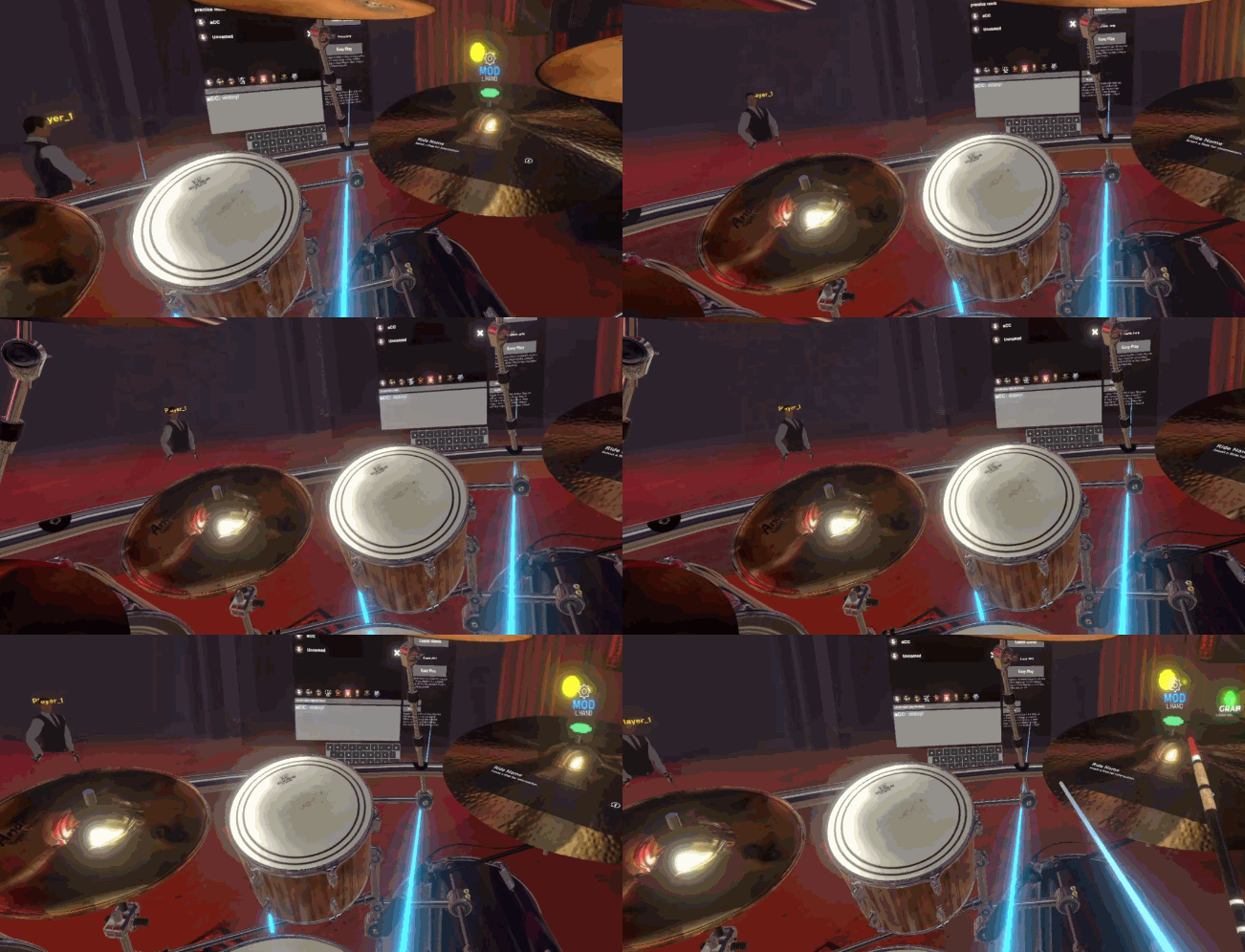
Change Your Username
When the multiplayer screen first appears, click the "Unnamed" box at the stop of the screen and enter your multiplayer username, this is the username other players will see above your players head and when you send a text message in the global chat box while in an active game.
Enter Multiplayer
Now click the START button in the center of the multiplayer screen. The multiplayer browser list will appear with a list of games, or be blank if no servers are currently made. Click any lobby listed to enter that game and join. If you don't enter the game after you click a lobby, the host hasn't started the game yet and is just sitting in the lobby, possibly waiting for someone or just pooling players. You can leave that lobby anytime by clicking Leave Game. When the host starts the game, you will be drawn into the game.
Join A Game
Click any of the active games in the list that are labeled "Quest".
Any player can play the multiplayer drum set, they just need to walk up to it. If you don't trust the players in your game, and are playing a show, some stage entrances may be blocked by a bouncer to protect the drummer.
You will not be able to use any pedal controls if you leave the drum seat. You must walk to the drum seat to gain access to be able to set and use them. Walking away from the drum seat in multiplayer will reset your pedal settings each time, so other players can set their own. When walking up to the kit, always set your pedal settings, enter the main menu and the "Extra Settings" tab. Enable then disable all pedal options, and then enable the one you want to use.
Host A Game
When you host a game anyone can join, at anytime, your game session will be listed in the server browser. When you are in the multiplayer browser, click the "+" button to start a lobby, enter the name of your new lobby and enter the max amount of players allowed to join.
Be sure to select the toggle option Meta Quest or PCVR this will let others know if they can join, multiplayer is not crossplatform.
Click Create. Your lobby is ready and now viewable by others with the game in the multiplayer game list. You can wait until some players join in your lobby, or you can press Start Game anytime. You can also start the game session without any players in your lobby, anytime, or wait for players to join the lobby "pooling" them, once you get enough players or the players you were waiting for, you can send everyone to an active game all at once by clicking the Start Game button. As the host, you have a special abilities... you can walk through walls, hide behind walls for the best view in the house, and fly. All other players will be forced to walk around in the physical space.
When the host quits the game all clients will be kicked from the game.
Who Can Play The Kit?
Any player can play the multiplayer drum set, they just need to walk up to the drum seat to be granted access to configure pedals and control them. Main menu, Extra Settings button. Walking away from the drum set in multiplayer mode will reset your pedal settings each time for other players to use how they wish, when walking into the drum kit and seat, always set your pedal settings.
Host DJ Controls
If you look at your multiplayer game browser that follows you around in-game, you will see a dropdown box with a selection of songs, as the host and the one who created the server, you are also the only DJ. Only you can select and play these songs, all other players in the game will hear the songs you choose, but the song dropdown list will be disabled for them, along with the volume slider.
The music player will keep sync with players in the room, and if a player joins late, the song will pick up right were you are in the host room.
You do not need to be next to the drum kit to change songs or play as the DJ. You can enable the Follow Menu option and the menu will follow you anywhere you go.
Discord
If you are a member of the Discord, you will see the #quest-server-spy or #pc-server-spy channel update when players create a mutliplayer server. This may alert players to your game.
Only host can choose a selected song in the song list.

Only host can kick players by clicking the "X" next to their name.

Chat Box
The chat will be enabled and start to send receive message once you enter an active game as host or a player, chat box does not work while just sitting in a lobby. Anyone in an active game can talk in chat. Your chat message will be displayed in the global chat for anyone in the room to see. See below for chat options.
Menu Follow
Click this to dock your multiplayer menu anywhere, you will only need this menu if you are reading chat or are the host DJ changing music.
Undock Chat
Click this to undock the global chat window.
(Global) Chat
Chat Option Will send your message in the global chat box everyone can see, it will also display your message above your players head in-game.
(Private) Chat
With private chat enabled, the message you send in chat will only be displayed above your head in your players chat bubble, only players who can see you will be able to read it, your message will not be seen in the global chat box, it will only be displayed in your own global chat box. Private chat is a great way to talk to a group of players only near to you, as your message will only be displayed above your players head in the game.
Changing Drum Sounds
Anyone can set the house drum set drums, hat, ride cymbal etc. to any sound they like, however you set your sounds on the house kit is how they will be heard by other players. This does not need to be changed each time if you are swapping the kit with other players. Every time you leave the kit or re-enter, your drum sounds you selected will be there, not the ones other players have set. When other players change the sounds, you will hear their custom selected sounds, enter Edit Mode just like normal, press in your left analog control stick. Place your left hand over and drum or cymbals mod gear and change the sound. Note: The drum heads and cymbals will not change visually for the clients, but they will hear the sound mods.
Jump
You can enable jump if you are a client, host cannot use this optoin. You won't be able to get onto the stage without jump enabled as a client / player. Once enabled tap your left controllers analog stick forward to jump.
Player Pedal Access
You will not be able to use any drum controls on your controllers like your pedal options until you walk up into the drum seat. Once you walk into the drum set click your left controller analog stick in and bring up the main menu, and click Extra Settings. All pedal options are set to enable when a player first walks up to the drum kit. Turn on every pedal option and then turn them off and select what one you would like to use and enable it. Walking away from the drum set in multiplayer mode will reset all pedal settings each time. If you walk away during a set your pedal settings will be reset and ready for the next user.
NOTICE --- Returning to Single Player
Entering multiplayer will break single player mode. To return to single player reset the game use the Soft Reset option under Main Menu > Extra tab or the Soft Reset option right on your multiplayer menu.
NOTICE --- Beta
Anything can be changed at anytime, some DLC items are currently available in preview in multiplayer mode. Multiplayer is currently free but this may change in the future.
Passthrough (Meta Quest)


Main menu. Safe Passthrough.
Passthrough will allow you to use the drum kit and see your real environment "the real world" around you. This can be helpful if you are playing a show or need to see what's going on around you while playing in-game. You can find the passthrough option in the main menu tab, see image below.
Safe Passthrough - This option is what you would choose if you don't want hand tracking to accidently enable while you're playing. It's the standard passthrough option and the one we recommend using.
Hand Tracking + Optional Passthrough - (THIS OPTIONS BEEN REMOVED -- Quest hand tracking was no where up to drumming at any speeds. This option might return later.) This option will enable both hand tracking and passthrough. Once enabled, double tap your controllers together to enable hand tracking, you can then place your controllers down and use just your real hands. I would only use this option if you want to try the hand tracking. We recommend using the "Safe Passthrough" option.
Drum anywhere with passthrough.
PCVR Technical
Q: Missing or delayed hits?
-
A) If you have to many lights or cameras enabled you can take a performance hit on your PC if your GPU/CPU can't handle it, causing the physics to get bottle necked while the PC drops frames.
-
B) Dirty VR sensors. Bad tracking setup.
Q: My hardware pedals work but sometimes they misfunction?
-
If your pedals have software configuration for functionality please try its different modes with gameplay like single press or long press. We recommend single press. Please contact for more help. (See screenshot below)
Q: I rarely loose tracking and drumming?
-
Menu > Sticks > Cycle Physics will refresh physics and any errors with drumming.

Meta Quest Technical
Some technical information using the Meta Quest headset Android OS (Horizon).
Q: Can I run the Quest 3 120HZ refresh rate 3 mode?
-
VR Drums has been tested running in 120HZ. Although it will run you may encounter some in-game glitches or drum effects. It is recommend you run in the game in the default 90HZ.
Q: What Pedal Should I Get?
-
PCsensor foot swtich. Plug and play. USB-A to USB-C adaptor or hub.
Q: My hardware pedals work but sometimes they misfunction?
-
If your pedals have PC software reprogramming configuration apps for functionality try its different modes with gameplay like single press or long press. We recommend single press. Please contact for more help.
Q: I rarely loose tracking and drumming?
-
Menu > Sticks > Cycle Physics will refresh physics and any errors with drumming.
Q: I can't access my files?
-
If you are having trouble getting to your files make sure you have the file permission enabled for VR Drums on the games settings / permission on your Meta Quest. If you are still having trouble accessing your files, place them on your Meta Quest in the location android/data/com.aliencybercoat.vrdus/files. This is a safe location that has no extra permissions being blocked by the Android OS.
App Permissions
In most cases you don't need any of the permissions enabled. You can leave them all disabled. Read below for more information.
File Permission
Only needed if you are using custom art images or have issues with accessing files in game.
Location
Only needed if you are using Bluetooth and MIDI.
Access Fine Location
Only needed if you are using Bluetooth and MIDI.
Where do I get custom songs for note highway?
https://rhythmverse.co/songfiles/game/chm
This is just one of many sites on the internet that have Clone Hero music that includes drum notes. There are a handful of songs that come with the game but you must add custom songs yourself, you'll have to search around. Search Google or YouTube for "Clone Hero drum charts", or search your favorite song/band example "your favorite song clone hero drum chart" there is a large community of charters that post their work on the
net, some sites are dedicated to custom charters.
-
VRDUS supports most Clone Hero drum charts (.mid) and (.chart) both single-track and multitrack songs (songs with multiple audio files, drums, vocals, guitar and so on). Drums will be removed automatically for you if you use a multi-track song folder.
Most of these sites have listed or displayed what instrument notes comes with the song, technically called a "chart" or "beat map" of the song. Make sure you find the songs that have the drums included.
The example image below of a website and the details of the four random song listings. The second song has no drum notes, as we can see no drum icon... that song just has guitar notes, but the other three songs listed below do have drum notes, we can see the drum icon with its difficultly listed to the right of it.
Skip to How to add custom songs

Playing Audio Files (.MP3 .OGG .WAV)
In-game option to play your audio files.
The in-game audio player supports .MP3 .WAV and .OGG audio files.
Enter the main menu and select Audio Player, use the file browser that appears to find your audio files from anywhere on your Meta Quest or PC, just select one to play. If you want to restart the song, hit the stop button and select the file again.
Audio Player Startup Location
Meta Quest - Music Folder \Internal shared storage\Music
PCVR - C:\Users\%username%\Music
Click the Directory Up button on the file browser to gain access to other parts of your Meta Quest or Windows files.
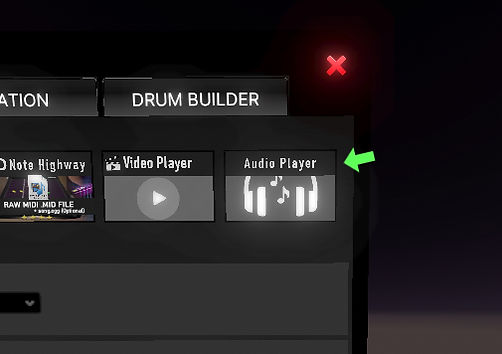
Scroll the audio browser like a cellphone screen, use your laser to grab the file browser and swipe up or down while squeezing the grip trigger then releasing it. When you find your audio file in the browser, select one to have it start to play.
Use Directory Up button to access any area of your Meta Quest or PC.
Note:
If you are having errors accessing your audio from others areas of your Meta Quest headset, just place your audio files in the working directory the audio player browser boots up in, on your headset at \Internal shared storage\Music., this is a safe directory and will always access audio with no issues.

Q: Why is the music player not working in Meta Quest?
-
VRDUS may need to access to your Meta Quest storage and access the file system. Make sure you have READ permission enabled on you device for VR Drums Ultimate Streamer in its settings / permissions on your Quest. To change permissions for an app on your Meta Quest, navigate to the app in your library, click on the three dots in the upper right of the games library image, and then select Settings to toggle desired access like microphone or camera.
Other Options To Play Music:
-
Spotify
Open Spotify web player on Meta/Oculus browser, play any song, go to the game and then with a PC or phone hit play while Spotify is being connected to the web player.
-
Quest Web Browser
Open the web browser and find your music site.
-
Any Background App
YouTube Quest browser etc.
-
Casting
Casting your screen and game content is enabled on the Meta Quest version. Cast your game anywhere you like.
-
Line Splitter (Quest 2 Only)
Use a headphone split adapter from Amazon that allows you to connect the adapter to headset headphone jack and also a line in source for audio and also plug in your headphones.
